REACH FOR THE STARS
August brings one of the year’s most highly anticipated celestial events—the Perseid meteor shower. So, this month, Talk of the Town is focusing on all things celestial, from essential gear to make the experience more comfortable and dark sky destinations near and far to books that help bring the universe a little closer to home.
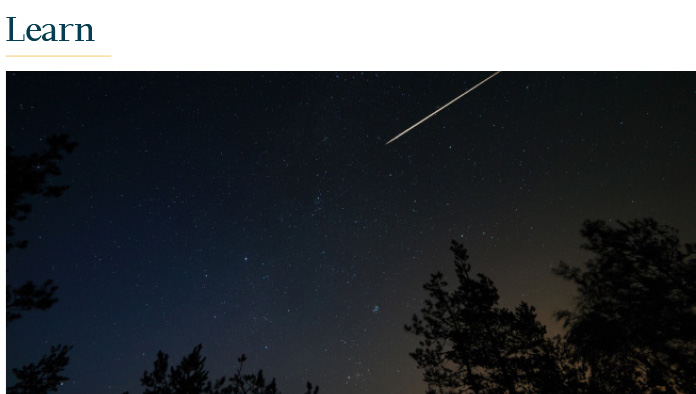
Few nighttime sights are as magical as a meteor shower. Despite the name, meteors have nothing to do with weather—they’re tiny bits of rock and dust, often no larger than a grain of sand, left behind by comets as they orbit the Sun. When Earth passes through one of these ancient debris trails, the particles slam into our atmosphere at tremendous speeds, burning up in brilliant streaks of light that we call “shooting stars.”
Among the dozen or so major meteor showers each year, none is more beloved than the Perseids. Active from mid-July through late August, they occur as Earth crosses the debris stream of Comet 109P/Swift-Tuttle, a giant comet that circles the Sun just once every 133 years. The shower takes its name from the constellation Perseus, where the meteors appear to originate, although they can streak across any part of the sky.
The 2026 Perseids promise to be especially rewarding. They peak on the nights of August 12-13 during a new moon, meaning moonlight won’t wash out the fainter meteors. Under dark, clear skies, observers could see 50 to 100 meteors per hour, including brilliant fireballs that leave glowing trails lingering for several seconds.
The best part? No telescope or binoculars are required. Simply find a dark location away from city lights, let your eyes adjust to the darkness for about 20 minutes, lean back in a comfortable chair, and enjoy one of nature’s greatest summer spectacles.
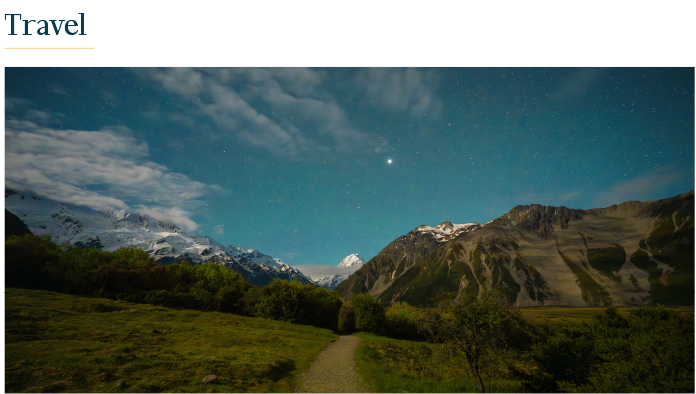
Fortunately, you don’t have to travel far to escape Chicago’s city lights for better stargazing. And if you’re willing to venture farther, you’ll find dark skies in some of the world’s most captivating places.
Just about two and a half hours south of Chicago, Middle Fork River Forest Preserve is Illinois’ only certified International Dark Sky Park. Designated in 2018, the preserve offers exceptionally dark skies, dedicated viewing areas, and even a Dark Sky Trail designed specifically for nighttime observing.
Headlands International Dark Sky Park near Mackinaw City, Michigan boasts more than two miles of undeveloped Lake Michigan waterfront where the Milky Way shines brilliantly overhead. In neighboring Wisconsin, Newport State Park at the tip of Door County’s quiet peninsula was the first International Dark Sky Park in the state and is renowned for its remarkably low levels of light pollution.
For a true bucket-list adventure, head to Aoraki Mackenzie International Dark Sky Reserve in New Zealand, where the magnificent Southern Alps frame some of the darkest skies on Earth. Or journey to Kerry International Dark Sky Reserve along Ireland’s spectacular Wild Atlantic Way, where pristine night skies, rugged coastlines, and charming villages combine for an unforgettable celestial vacation
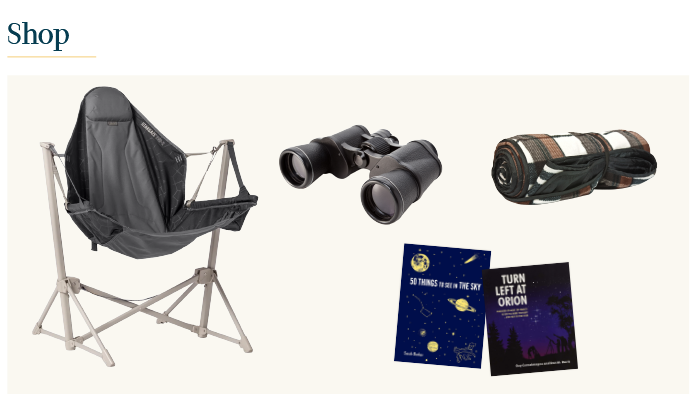
You don’t need an expensive telescope to enjoy August’s Perseid meteor shower or stargazing throughout the year—just a few well-chosen essentials can make the experience far more comfortable and rewarding.
A comfortable chair.
Astrophotographer Stephanie Vermillion, writing for Outside magazine, recommends the NEMO Stargaze Evo-X Reclining Camp Chair, whose hammock-like design lets you gaze overhead without straining your neck.
Binoculars. Before investing in a telescope, consider a quality pair of binoculars. Outside recommends the Nikon Monarch M7 8×42, powerful enough to see the Moon’s craters and stars otherwise invisible to the naked eye. For travel, they’re also ideal for viewing wildlife and distant landmarks.
Don’t forget the accessories. A red-light headlamp preserves your night vision while helping you navigate in the dark. A water-resistant blanket keeps you warm and dry as dew settles in, and a strip of glow-in-the-dark tape on your phone or backpack can save you from fumbling around after sunset.
A good guidebook. 50 Things to See in the Sky by Sarah Barker is an excellent beginner’s companion. For those ready to dig a little deeper, the classic Turn Left at Orion by Guy Consolmagno and Dan M. Davis has helped generations of amateur astronomers navigate the night sky with binoculars or a small telescope.

Whether you’re learning about the night sky or simply looking for a bit of cosmic inspiration, these books bring the wonder of space a little closer to Earth.
Cosmos by Carl Sagan: A modern classic that blends science and philosophy, inviting readers to see the universe with curiosity and awe. Still one of the most beloved introductions to astronomy.
The Calculating Stars by Mary Robinette Kowal: A gripping alternate-history novel that explores an alternate 1950s where a massive meteorite strike accelerates the space race while forcing humanity to confront deep-seated societal prejudices.
Astrophysics for People in a Hurry by Neil deGrasse Tyson: A fast-paced, accessible guide to the universe, breaking down complex ideas like black holes, dark matter, and cosmic origins into clear, engaging insights for curious readers.