WAXING POETIC
April is National Poetry Month—a time to celebrate the rhythm, imagery, and insight that poetry brings to everyday life. In that spirit, Talk of the Town is waxing poetic this month, with literary landmarks worth a journey, the flavors and symbolism of food in verse, Chicago’s vibrant poetry community, and ways to read and savor a poem each day.
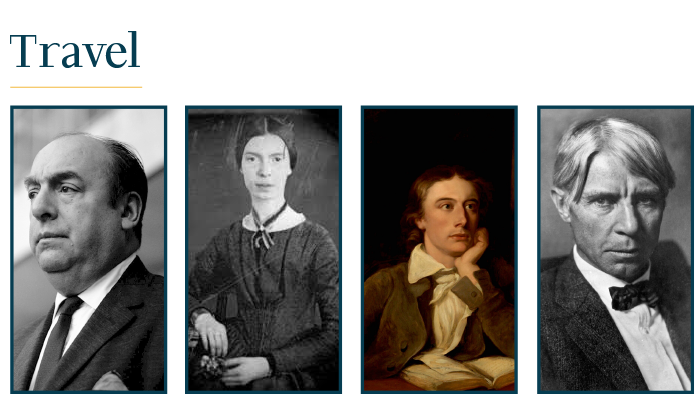
Delve into the lives of your favorite poets as you explore the world, gaining insight into their lives and passions and the places that inspired them.
In the bohemian Bellavista district in Santiago, Chile, La Chascona was built by Nobel Prize-winning poet Pablo Neruda for his secret love Matilde Urrutia. Ingeniously constructed on a steep hillside, the home is filled with nautical touches and an eclectic collection of personal treasures reflecting Neruda’s travels, political life, and devotion to the sea.
The Emily Dickinson Museum in Amherst, Massachusetts encompasses The Homestead—where Emily Dickinson was born, lived much of her secluded life, and composed nearly 1,800 poems—as well as The Evergreens, home to her brother’s family. Dickinson’s quiet domestic world and the remarkable story of her posthumous discovery are inseparable from these lovingly preserved houses.
At the foot of Rome’s Spanish Steps, the Keats-Shelley House is dedicated to British Romantic poets and preserves the final residence of John Keats, who died here in 1821 at just 25. In addition to a significant library of Romantic poetry and criticism, the museum houses a fascinating collection of artworks and relics related to John Keats, Percy Bysshe Shelley, Lord Byron, and others in their circle.
Closer to home, Carl Sandburg lived in Ravenswood at 4646 North Hermitage Avenue. It was here in 1913 that he wrote Chicago, his proud gritty portrait of the city—with its iconic lines “Stormy, husky, brawling, City of Big Shoulders.”
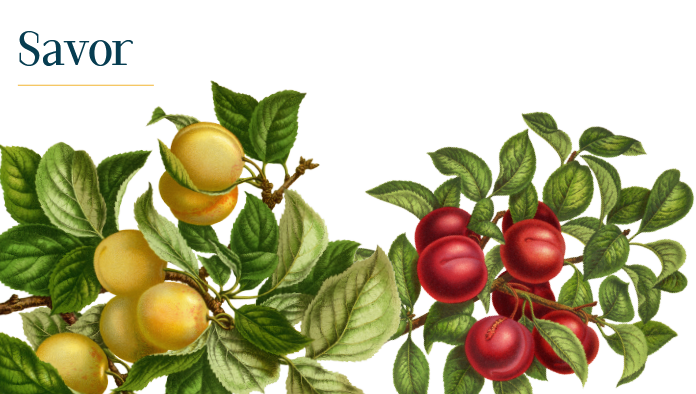
Food in poetry is rarely just sustenance—it becomes symbol, desire, memory, even moral tension.
In “This Is Just To Say,” William Carlos Williams transforms a refrigerator confession into a study of immediacy and sensual pleasure. The plums—“so sweet / and so cold”—embody the modernist’s devotion to ordinary things rendered with precision. The poem’s spare free verse mirrors the fleeting act it describes: appetite satisfied, apology offered, intimacy both domestic and charged.
Fruit takes on a more explicitly symbolic role in “From Blossoms,” where Li-Young Lee transforms peaches purchased from a roadside stand into vehicles for transcendence. Lee’s lush, cascading syntax elevates seasonal abundance into a meditation on mortality and gratitude. Eating becomes almost sacramental—a fleeting sweetness set against the inevitability of loss.
With keen wit and humor, “The Health Food Diner” by Maya Angelou playfully rejects restraint. Angelou catalogs virtuous menu options only to confess a longing for traditional comfort foods. The humor underscores a deeper theme: food as cultural memory and emotional truth. Beneath the wit lies a celebration of authenticity over pretense.
Across these poems, what we taste is never merely flavor—it is longing, identity, and the rich complexity of being human.

For more than 50 years, the Chicago Poetry Center has been the region’s poetry hub—with a mission to “connect people and poetry, equitably engage poets with communities, and advance creative literacy.”
A cornerstone of this mission is Blue Hour, hosted on the third Wednesday of each month, fall through spring, at Haymarket House in Chicago’s Uptown neighborhood. Designed for poetry writers and readers at any level, each session includes a writing workshop followed by a free open mic event and readings by two featured poets.
On April 15, Blue Hour welcomes Diego Báez, a finalist for the Georgia Poetry Prize, and Samyak Shertok, a Nepal native and lauded poet who currently teaches creative writing at Hendrix College.
The final Blue Hour of the season on May 15 features Patrycja Humienik, author of We Contain Landscapes which was selected as a New York Public Library Best New Poetry Book, and Soham Patel, winner of the Subito Prize for innovative, full-length poetry.
When summer arrives in a couple months, the Chicago Poetry Center moves outdoors with Poetry at the Green, an open-mic reading series that takes place in the scenic West Loop setting of The Green at 320.
Begin your day with a poem! The free Poem of the Day delivers a work of poetry to your inbox—selected from a curated archive of nearly 50,000 poems. For a deeper dive, subscribe to Poetry magazine. Founded in 1912, Poetry is the oldest monthly devoted to verse in the English-speaking world. The magazine established its reputation early by publishing the first important poems of T.S. Eliot, Ezra Pound, Carl Sandburg, William Carlos Wiliams, and numerous other now-classic writers.
Both the free Poem of the Day and Poetry magazine are produced by Chicago’s own Poetry Foundation. Established in 2003, the Foundation builds on the magazine’s storied legacy with a mission to transform lives through the power of words. Their work aims to amplify poetry and celebrate poets by fostering spaces for all to create, experience, and share poetry.